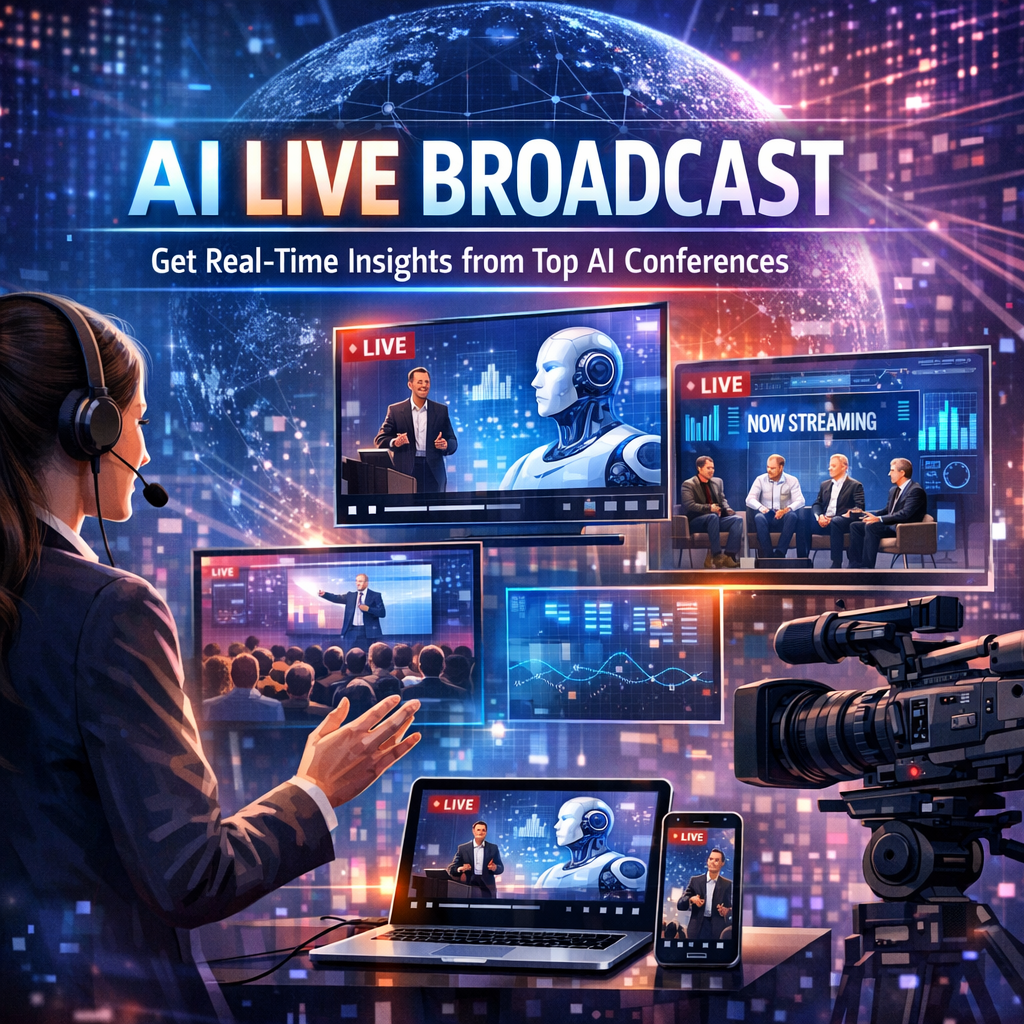
AI Live Broadcast: Get Real-Time Insights from Top AI Conferences
AI Live Broadcast: Real-Time Insights From the World’s Top AI Conferences
In the fast-evolving field of artificial intelligence, staying updated with the latest advancements and breakthroughs is essential. AI live broadcasts provide an immersive experience for those who cannot attend the world’s top AI conferences in person. This blog explores how these live broadcasts are revolutionizing the way we access and learn from major AI events.
What is AI Live Broadcast?
AI live broadcast refers to the real-time streaming of AI conferences and seminars. Using advanced streaming technologies, these events are broadcasted globally, allowing viewers to participate virtually. This initiative opens up opportunities for professionals, researchers, and enthusiasts to gain insights without the need to travel.
Benefits of AI Live Broadcasts
1. Accessibility
- AI live broadcasts make learning and engagement possible for a global audience. Regardless of geographical or financial limitations, anyone with internet access can tune in to the latest discussions in AI research and development.
2. Real-Time Interaction
- With features like live Q&A sessions and interactive polls, remote attendees can actively participate. This interaction is crucial for networking and sharing ideas with peers and leaders in the field.
3. Cost-Effective
- Attending global conferences can be costly, considering travel, accommodation, and registration fees. AI live broadcasts eliminate these expenses, making it a budget-friendly alternative.
Insightful Events to Watch Out For
Several high-profile AI conferences offer live broadcasts. Here are a few to keep an eye on:

1. NeurIPS (Neural Information Processing Systems)
- As one of the largest and most prestigious AI research conferences, NeurIPS features workshops, presentations, and discussions on neural computation, machine learning, and related topics. Their live broadcasts allow viewers to watch keynotes and selected sessions in real time.
2. ICLR (International Conference on Learning Representations)
- ICLR is another essential event for machine learning researchers, focusing on deep learning and its applications. The conference often provides a live stream of plenary sessions and tutorials.
3. CVPR (Conference on Computer Vision and Pattern Recognition)
- Specializing in image and video analysis, CVPR is the largest conference covering advances in computer vision. Its live broadcasts are a goldmine for professionals looking to stay on top of the latest trends and technologies in the field.
Tips for Maximizing Your AI Live Broadcast Experience
1. Check the Schedule and Plan Ahead
- Ensure you know the timetable of the conference to manage your schedule accordingly. Prioritize the sessions that are most relevant to your interests or professional needs.
2. Engage Actively
- Utilize interactive features such as Q&A, live chats, and polls. Engagement not only enhances the learning experience but also increases your visibility among other attendees and speakers.
3. Use Multiple Devices if Necessary
- Have a backup device ready in case of any technical issues with your primary device. This ensures that you won’t miss out on any part of the conference due to unforeseen technical difficulties.
4. Follow Up
- After the conference, connect with speakers and attendees via social media or professional networks. Engaging in post-event discussions can deepen relationships and open up more opportunities for collaboration.
Conclusion
AI live broadcasts are a fantastic way to tap into the pulse of cutting-edge AI developments from around the world. They democratize the access to knowledge and expertise, breaking down barriers and fostering a more inclusive global AI community. Whether you’re an AI professional, an academic, or simply an enthusiast, these live broadcasts can be an invaluable resource for staying updated and connected in the AI landscape.