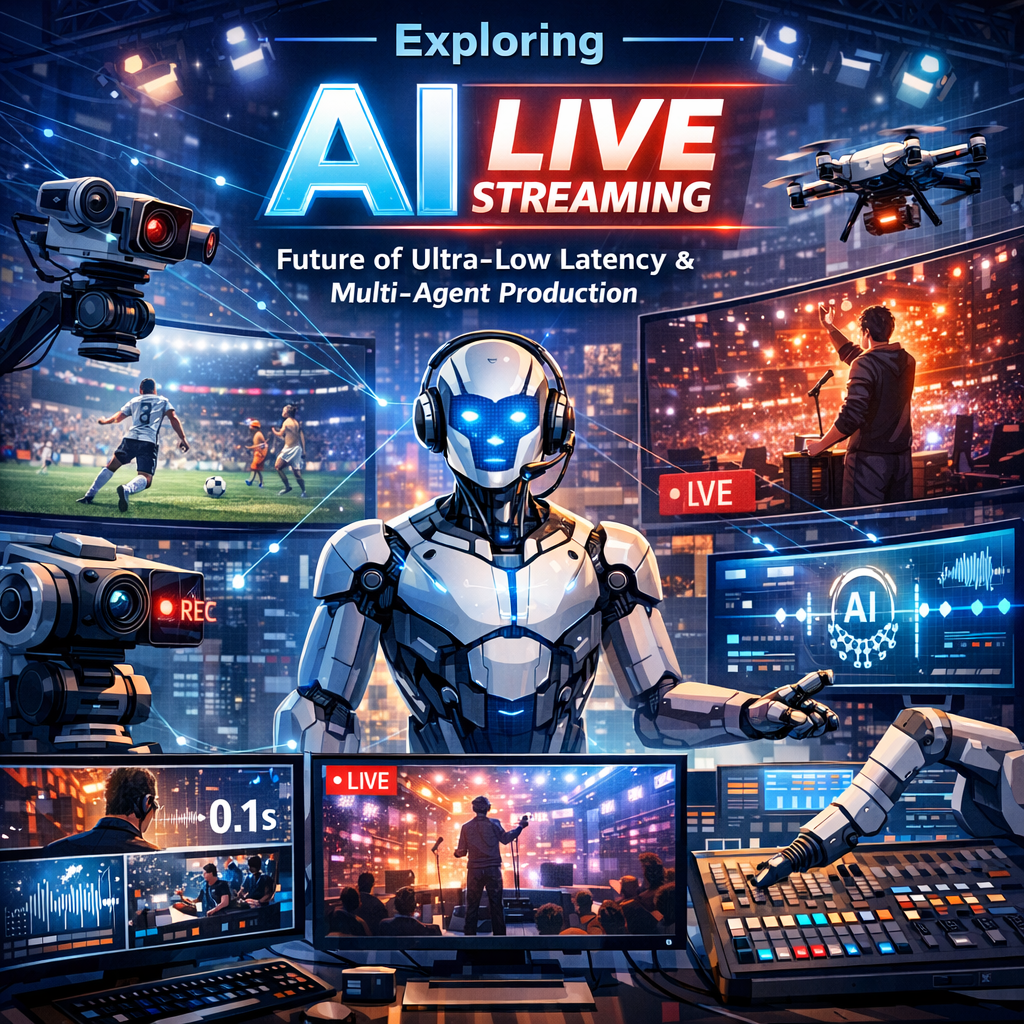
Exploring AI Live Streaming: Future of Ultra-Low Latency & Multi-Agent Production
The Future of AI Live Streaming: Ultra-Low Latency, Multi-Agent Production
The landscape of live streaming is being transformed by rapid advancements in artificial intelligence. The next frontier, AI live streaming, promises to revolutionize how we consume media, participate in events, and interact with content in real-time. Ultra-low latency and multi-agent production are at the forefront of this revolution, propelling the industry into a new era of immediacy and interactivity.
Ultra-Low Latency in AI Live Streaming
Latency—the time delay between capturing and displaying content—has long been a challenge in live streaming. In a world where every second count, reducing latency is paramount for improving viewer experience and engagement.
What is Ultra-Low Latency?
Ultra-low latency refers to reducing the delay to almost real-time, typically below one second. This level of immediacy is crucial during live events like sports, gaming, and concerts, where even a slight delay can spoil real-time reactions and interactions.
How AI Helps Achieve Ultra-Low Latency
AI enhances the streaming infrastructure through more efficient data processing and predictive algorithms that anticipate data requirements. This not only speeds up the delivery of content but also stabilizes the stream under varying network conditions.
- Pre-buffering Techniques: AI predicts user behavior to load content in advance, thus minimizing delays.
- Adaptive Bitrate Streaming: AI dynamically adjusts video quality based on the user’s internet speed, providing a continuous, buffer-free experience.
Multi-Agent Production in AI Live Streaming
Multi-agent production refers to the use of multiple AI systems working in concert to manage different aspects of the live streaming production process. This collaborative AI approach can transform live production by automating complex tasks that require precision and adaptation.
Elements of Multi-Agent AI Systems
- Camera Work: AI algorithms can control camera movements, focus, and angles, adapting in real-time to the dynamics of the event.
- Editing and Mixing: Live feeds can be automatically switched between different cameras and audio sources, ensuring high-quality production without human intervention.
- Content Moderation and Enhancement: AI can moderate content in real-time, filtering out unwanted elements while enhancing the overall visual and auditory experience.
Benefits of Multi-Agent Production
- Consistency and Quality: Automated systems provide a consistent level of production quality that does not fatigue or require breaks.
- Scalability: Multi-agent systems can easily scale to manage multiple streams simultaneously, ideal for large-scale events.
- Cost-Effectiveness: Reduces the need for a large production crew, thus saving on labor costs and logistics.
Challenges and Considerations
While the potential of AI in live streaming is immense, there are several challenges and ethical considerations that need to be addressed:
- Privacy and Security: Implementing robust security measures to protect the data used and generated by AI systems.
- Bias and Fairness: Ensuring the AI systems do not perpetuate biases or unfair representations.
- Regulatory Compliance: Adhering to global standards and regulations concerning digital content and AI deployments.
Conclusion: What Lies Ahead for AI Live Streaming?
The future of AI live streaming is brimming with possibilities. As technology continues to evolve, we can expect further reductions in latency and more sophisticated multi-agent production systems. This will not only enhance the viewer’s experience but also expand the possibilities for content creators and marketers.
The integration of AI into live streaming is setting the stage for a more interactive, immersive, and inclusive media landscape. The continual improvement of these technologies promises to keep audiences more engaged and provide a seamless, high-quality viewing experience that today’s digital consumers demand.