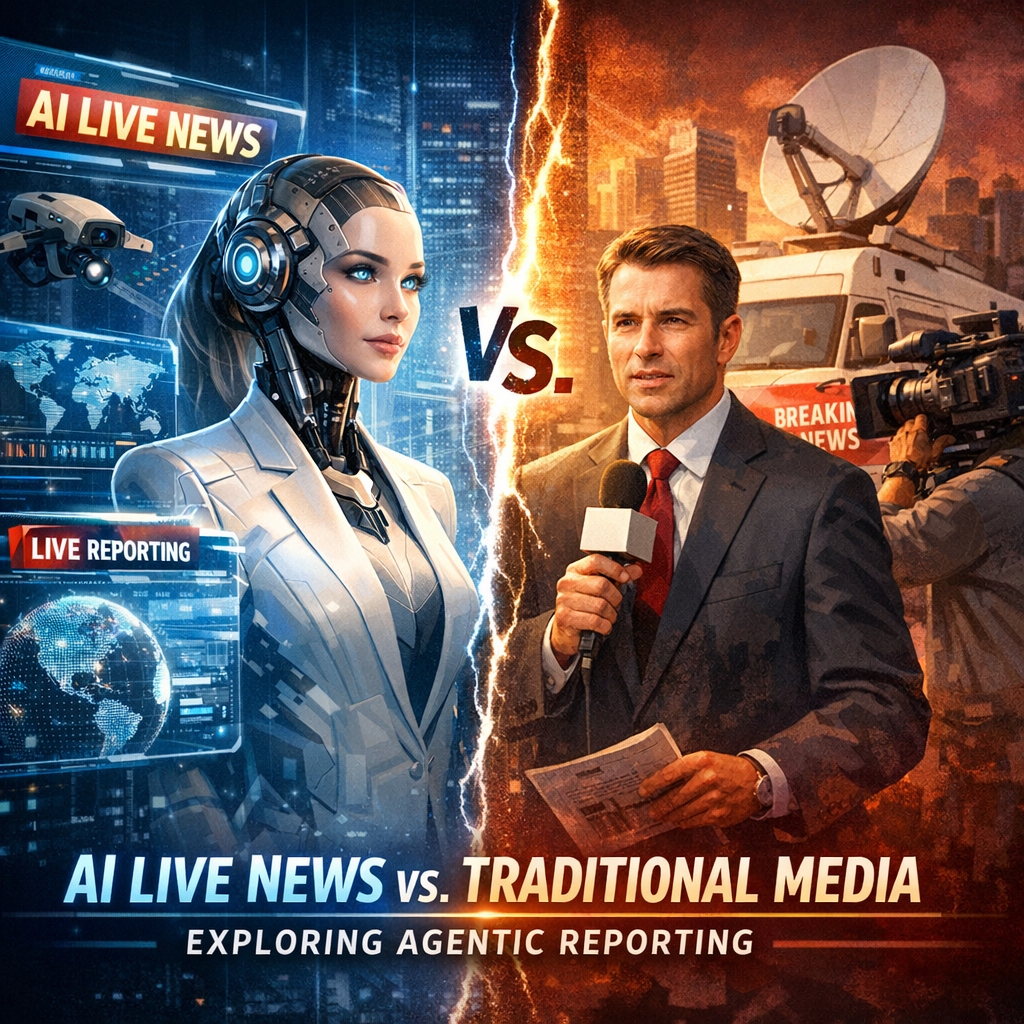
# AI Live News vs Traditional Media: What Sets Agentic Reporting Apart

In an era dominated by rapid technological advancements, the field of news reporting has seen transformative changes. The emergence of AI Live News, powered by sophisticated algorithms and machine learning, has begun to challenge the traditional methods of media and journalism. This shift has brought about a new concept called "Agentic Reporting," which is reshaping how we consume news. Let's explore what sets agentic reporting apart from traditional media outlets.

Understanding AI Live News


AI Live News leverages artificial intelligence technologies to gather, report, and distribute news stories. This form of reporting uses algorithms to scan through vast amounts of data, identify trends, and generate news stories in real-time. Unlike human reporters, AI systems can analyze data from multiple sources simultaneously, providing updates with incredible speed and accuracy.

Key Features of AI Live News:


- Speed: AI systems can report news as it happens, almost instantaneously.
- Accuracy: Advanced algorithms reduce human error and bias in news reporting.
- Scalability: AI can handle vast data sets that are humanly unmanageable.

Traditional Media and Its Limitations


Traditional media, consisting of newspapers, television, and radio, relies heavily on human intervention. Reporters collect information, journalists write stories, and editors finalize the content before it is published or broadcasted. This process is not only time-consuming but also prone to biases and errors.

Challenges Faced by Traditional Media:


- Time Delays: The editorial process can cause significant delays in news delivery.
- Bias and Subjectivity: Human emotions and opinions can influence reporting.
- Resource Intensive: Extensive manpower and time are required for reporting and editing.

What Is Agentic Reporting?


Agentic Reporting in AI Live News refers to the capability of AI to act as an autonomous agent, having the authority and capacity to make decisions and report news independently. This is a leap from traditional automated reporting as it incorporates decision-making abilities typically reserved for human agents.

Characteristics of Agentic Reporting:


- Autonomy: AI not only gathers data but also decides the significance and newsworthiness of events.
- Proactiveness: Unlike reactive human reporting, AI can predict and emphasize emerging trends.
- Personalization: AI can tailor news feeds to individual preferences and behaviors, enhancing user engagement.

Advantages of Agentic Reporting Over Traditional Media


Agentic Reporting by AI Live News offers several distinct advantages that are hard to match by traditional media channels:

1. Real-time Updates: AI can continuously update its reports as new data becomes available, keeping the audience informed in real-time.
2. Unbiased Reporting: By minimizing human handling, AI reporting reduces the scope for subjective bias.
3. Efficiency: Automation in reporting and decision-making processes greatly increases the efficiency and speed of news dissemination.

Addressing the Concerns


Despite its many benefits, the rise of AI in news reporting also presents challenges that need to be addressed:

- Reliability of Sources: AI systems are only as good as the data they process. Ensuring the reliability of data sources is paramount.
- Loss of Human Touch: AI may not fully replicate the empathetic and narrative-driven approach that human journalists offer.
- Ethical Considerations: Questions about transparency, accountability, and ethics in AI-driven reporting need clear regulations and standards.

The Future of News Consumption


As we move forward, the blend of AI Live News and traditional media will likely coexist, with each catering to different aspects of news consumption. Agentic Reporting, with its unique capabilities, may become increasingly mainstream, offering consumers a more personalized and instantaneous way to stay informed.

AI Live News powered by Agentic Reporting is setting new standards in the media industry. By understanding its potential and addressing its challenges, we can harness this technology to enhance the quality and reach of news reporting.