Generative AI Breakthroughs in Text, Image, Video, and Multimodal Intelligence
Generative AI Breakthroughs: Text, Image, Video, and Multimodal Intelligence
Generative artificial intelligence has moved from an experimental technology to a practical tool used across business, education, entertainment, research, and everyday life. Unlike traditional AI systems that mainly classify information or predict outcomes, generative AI can create new content, including written language, images, video, audio, software code, and interactive experiences.
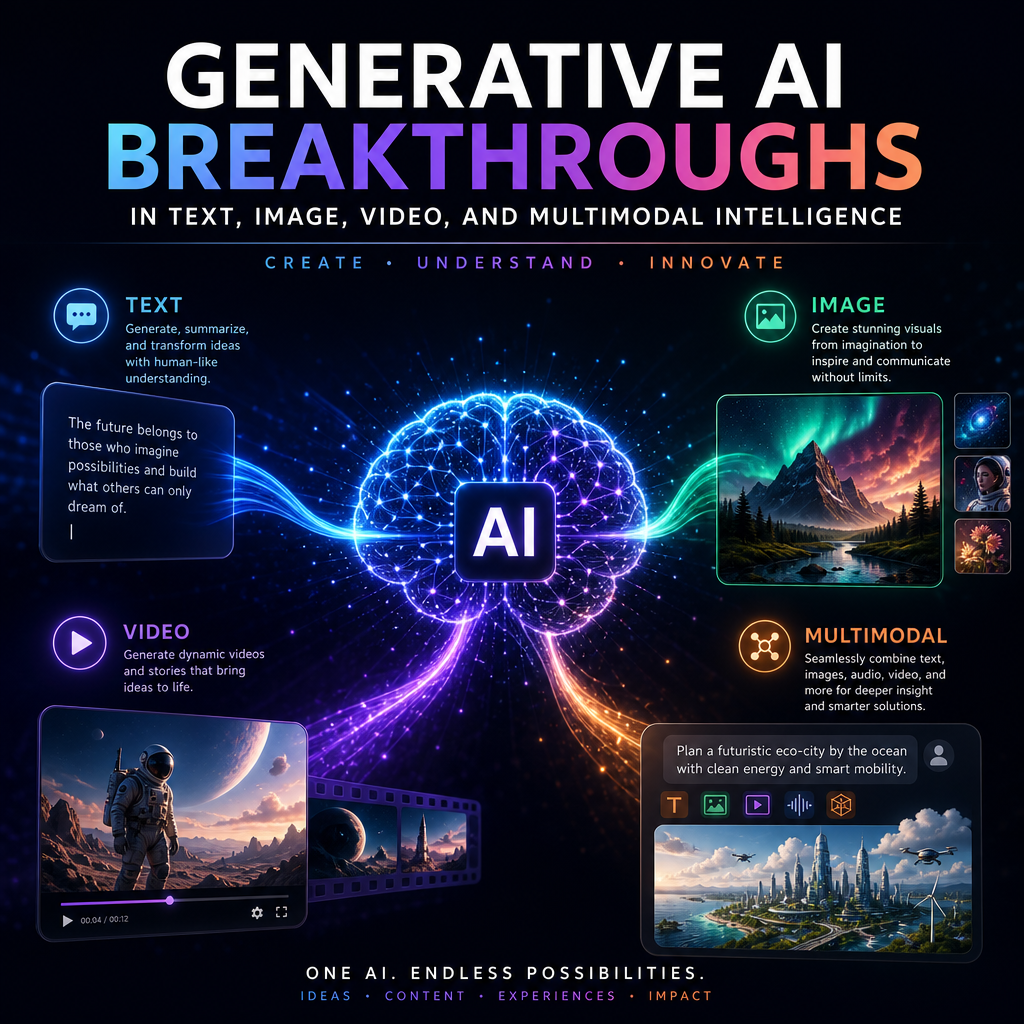
The most important advances are happening across four connected areas: text generation, image creation, video production, and multimodal intelligence. Together, these developments are changing how people interact with computers and how organizations produce information.

The Rise of AI Text Generation
Text generation remains one of the most visible applications of generative AI. Modern language models can understand context, summarize documents, answer questions, translate languages, draft emails, and support creative writing.
Earlier systems often produced repetitive or unreliable responses. Newer models are better at following instructions, maintaining context, and adapting their tone to different audiences. They can help a student understand a difficult concept, assist a programmer with debugging, or provide a first draft for a marketing campaign.

Practical Uses for Businesses
Organizations are using text-based AI to improve productivity in several ways:
- Creating reports, proposals, and product descriptions
- Summarizing meetings and research papers
- Providing customer service through conversational assistants
- Searching internal documents with natural-language questions
- Generating and reviewing software code
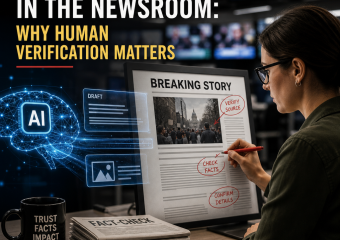
However, human oversight remains essential. AI-generated text can contain factual errors, biased assumptions, or outdated information. The most effective approach is to treat these systems as collaborative tools rather than unquestionable authorities.

Image Generation Becomes More Realistic
AI image generation has advanced rapidly through systems that transform written prompts into detailed visual content. Users can describe a subject, style, composition, or mood, and the model can produce an original image within seconds.
This technology is being used for concept art, advertising, game design, education, architecture, and social media. Designers can explore many visual directions before committing to a final version. Small businesses can create marketing assets without large production budgets, while educators can generate custom illustrations for lessons.
Recent models have also improved at handling text within images, realistic lighting, hands, facial expressions, and complex scenes. Despite these improvements, challenges remain. Copyright ownership, training data, impersonation, and the spread of misleading visuals continue to raise important legal and ethical questions.
Video Generation and Synthetic Media
Video generation is one of the next major frontiers. New AI systems can create short video clips from text prompts or animate still images. Some tools can maintain a consistent visual style, simulate camera movement, and generate scenes that would otherwise require expensive equipment or extensive editing.
Potential applications include:
- Previsualizing films and advertisements
- Creating educational demonstrations
- Producing personalized marketing videos
- Developing virtual environments for games
- Generating training simulations
AI-generated video is still developing. Maintaining consistent characters, realistic physics, and accurate object interactions can be difficult over longer sequences. Even so, the technology is lowering barriers to video production and enabling creators to experiment more quickly.
Multimodal Intelligence Connects Different Formats
Multimodal AI can process and combine multiple types of information, such as text, images, audio, video, and data. Instead of interacting with a system through text alone, users can show it a photograph, upload a document, speak a question, and receive a spoken or written response.
This creates more natural and flexible forms of interaction. For example, a multimodal assistant could analyze a chart, explain its key trends, translate a sign in a photograph, or identify potential issues in a technical diagram.
Why Multimodal Systems Matter
The real power of multimodal intelligence comes from connecting information that was previously separated. A healthcare professional might combine written notes, medical images, and voice observations. A technician could show a machine component and receive troubleshooting guidance. A teacher might provide a textbook page and ask for an age-appropriate explanation.
These systems can make technology more accessible, particularly for people who prefer voice, visual communication, or simplified explanations.
The Future of Generative AI
Generative AI is becoming less about producing isolated pieces of content and more about supporting complete creative and analytical workflows. Future systems will likely collaborate across applications, remember user preferences more effectively, and produce richer combinations of text, images, video, and audio.
Responsible development will be just as important as technical progress. Transparency, privacy protection, copyright safeguards, fact-checking, and clear disclosure of synthetic content will help build public trust.
The breakthrough is not simply that machines can generate content. It is that people can now communicate with intelligent systems in increasingly natural ways. As text, image, video, and multimodal capabilities continue to converge, generative AI will become a central layer in how information is created, understood, and shared.