ASUS ROG Zephyrus G14 Gaming Laptop: Dual-Platform AI Performance and RTX 5080
ASUS ROG Zephyrus G14: A New Generation of Portable AI Gaming Power
ASUS is preparing an updated version of the ROG Zephyrus G14, a compact gaming and creator laptop designed to combine high-end graphics, local artificial intelligence, and premium portability. Projected for market availability on March 31, 2027, the new model will build on the current ROG Zephyrus G14 family, including the GU405 and GA405, while introducing a new-generation AMD processor option, increased power delivery, and a redesigned thermal system.
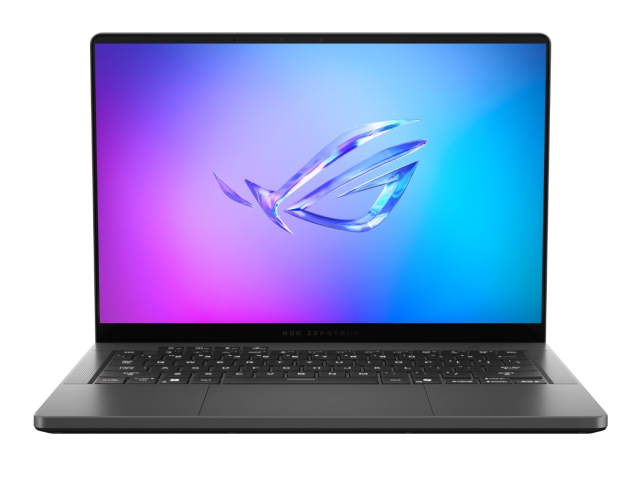
The updated G14 is expected to preserve the qualities that have made the Zephyrus line distinctive: a slim CNC-machined aluminum chassis, a high-resolution OLED display, powerful NVIDIA graphics, and a lightweight design suitable for gaming, creative work, and professional use. Its most notable advancement is the effort to provide a consistent on-device AI experience across both Intel and AMD processor configurations.

Product Overview
The ROG Zephyrus G14 is a 14-inch gaming and creator laptop measuring approximately 1.59 centimeters thick and weighing about 1.5 kilograms, or 3.48 pounds. It will be offered in two processor configurations:
- GU405: Equipped with the latest Intel Core Ultra processor
- GA405: Equipped with the latest AMD Ryzen AI processor
Both versions are expected to include an integrated neural processing unit, or NPU, alongside up to an NVIDIA GeForce RTX 5080 Laptop GPU. The Intel configuration will use Intel AI Boost technology, while the AMD model will use AMD XDNA technology.

The system is designed for Windows 11 Pro and Copilot integration, bringing AI tools directly to the laptop instead of requiring cloud-based processing for every task. These capabilities are intended to serve gamers, content creators, developers, students, and professionals who want a powerful computer that can also operate effectively while disconnected from the internet.
The projected suggested retail price is $3,599.

Higher Performance Through a Larger Power Envelope
One of the most important updates is the expected increase in system power. Maximum graphics power is projected to rise to as much as 140 watts, up from approximately 115 watts in the current generation. System TDP is also expected to increase to as much as 110 watts, compared with 100 watts previously.
This additional power gives the processor and GPU more room to sustain higher clock speeds during demanding workloads. In practical terms, users may see benefits in:
- Higher gaming frame rates
- Faster video rendering and 3D workloads
- Improved performance in AI-assisted applications
- More responsive multitasking
- Better sustained performance during long creative sessions
Higher power output also creates a significant engineering challenge. A thin laptop must dissipate heat efficiently without becoming excessively loud, heavy, or uncomfortable to use. ASUS is therefore redesigning the cooling system to support the expanded power envelope while maintaining the G14’s slim profile.
Thermal Engineering for a Compact Chassis
The updated Zephyrus G14 is expected to share a heatpipe-based cooling design, Tri-Fan Technology, liquid metal thermal compound, and a redesigned intake mesh featuring more than 13,000 precision-cut perforations.
On higher-GPU configurations, the heatpipe system can provide up to 42% direct motherboard contact, helping transfer heat away from key components. The Tri-Fan design supports airflow across the processor, graphics hardware, and surrounding components, while liquid metal thermal compound improves heat transfer between the chips and cooling system.
These features are especially important because the G14 is designed to fit powerful hardware into a chassis only 0.63 inches high. Effective thermal management helps the laptop maintain performance over time rather than delivering short bursts of speed followed by aggressive throttling.
The cooling system must also accommodate the different power and thermal characteristics of Intel and AMD processors. By validating both configurations within the same enclosure, ASUS aims to offer a consistent experience regardless of which processor platform a buyer selects.
On-Device AI Across Intel and AMD Platforms
A central feature of the updated ROG Zephyrus G14 is its approach to artificial intelligence. Rather than limiting AI features to a single processor platform, ASUS is engineering its software to operate across the Intel and AMD configurations.
AI workloads can be distributed among three types of computing resources:
- The CPU, for general-purpose processing and tasks that require flexibility
- The NPU, for efficient AI inference with lower power consumption
- The GPU’s Tensor Cores, for demanding AI workloads that benefit from parallel processing
This architecture allows the system to run AI applications locally. Proposed features include a Virtual Assistant, document summarization through a tool referred to as “Librarian,” voice transcription, AI Noise Cancellation, and Voice Print speaker recognition.
The Virtual Assistant could help users summarize documents, interact with information, and complete routine tasks without sending every request to a remote server. Voice transcription may assist during meetings, lectures, interviews, or content production. AI Noise Cancellation is intended to improve call quality by reducing unwanted background sounds, while Voice Print technology can recognize authorized speakers.
The engineering challenge is ensuring that these features offer similar latency, accuracy, and power efficiency on both Intel AI Boost and AMD XDNA NPUs. This requires software designed to work across different AI instruction sets and hardware acceleration frameworks rather than being tied to one vendor’s technology.
Premium Display for Gaming and Creation
The laptop is expected to feature a 16-inch-class 3K OLED display with a resolution of 2880 × 1800, a 120Hz refresh rate, and anti-reflection treatment. Despite the product’s 14-inch-class identity, the listed panel specifications emphasize an expansive visual workspace suitable for both entertainment and productivity.
The display is expected to cover 100% of the DCI-P3 color gamut, making it appropriate for color-sensitive creative work such as:
- Photo editing
- Video production
- Digital illustration
- 3D design
- Color grading
- Game development
OLED technology provides deep blacks, strong contrast, and vivid colors. The 120Hz refresh rate also supports smoother motion during gaming and general navigation. An ambient light sensor can automatically adjust brightness, helping reduce eye strain and power consumption during extended sessions.
CNC Aluminum Design and Slash Lighting
The Zephyrus G14 uses a CNC-machined chassis made from a single block of 100% aluminum alloy. An eight-step process involving sandblasting, polishing, and anodizing creates a rigid, refined exterior while supporting the structural demands of a powerful internal platform.
The chassis is shared across the Intel and AMD configurations. This means users choose a processor ecosystem without receiving a different physical design, display, keyboard, or cooling approach.
A distinctive visual feature is the 35-zone Slash Lighting system on the lid. Individually addressable LED zones sit beneath a mirror-finish glass panel and can provide a subtle visual indicator of system activity. The lighting may react to AI functions such as voice transcription or document summarization, giving users a glanceable indication that background processing is taking place.
The keyboard, touchpad, and speaker channels are designed with sub-millimeter precision so that components fit edge to edge without requiring unnecessary additional housing material. The aluminum construction may also offer an end-of-life advantage because aluminum is generally more readily recyclable than many mixed plastic composites.
Memory, Storage, and Battery Life
The ROG Zephyrus G14 is expected to support up to 64GB of LPDDR5X memory running at 8533MHz. High-speed memory is valuable for gaming, creative applications, multitasking, and AI workloads that require frequent data movement.
Storage capacity is expected to reach 2TB through a PCIe 4.0 SSD. This provides space for large game libraries, high-resolution video files, software projects, and locally stored AI models or documents. Fast storage also helps reduce application load times and improves responsiveness when working with large files.
A 73Wh battery supports mobile use, allowing creators, developers, and professionals to work away from an outlet. Battery life will naturally vary according to workload. Gaming and GPU-intensive AI applications typically require more power, while document work, web browsing, and light productivity should place less demand on the battery.
Three Key Innovations
1. Consistent AI Features Across Two Processor Platforms
The most distinctive innovation is the attempt to provide the same AI feature set on both Intel and AMD configurations. Buyers can choose between Intel AI Boost and AMD XDNA without automatically giving up access to key features.
This approach treats the processor platform as an ecosystem preference rather than a limitation on functionality. It also requires ASUS to test AI performance, accuracy, response time, and power use on both architectures.
2. High-End Performance in a Slim, Lightweight Design
The G14 combines an expected RTX 5080 Laptop GPU and increased power limits with a chassis weighing approximately 1.5 kilograms. Delivering this level of performance in a thin system requires careful coordination among the cooling hardware, motherboard layout, power delivery system, materials, and software controls.
The revised thermal design is intended to let the CPU and GPU operate at higher sustained clocks while retaining the portability expected from the Zephyrus family.
3. Integrated AI, Gaming, and Creator Workflows
Rather than treating AI as a separate feature, the G14 integrates AI into communication, productivity, and creative workflows. Local document summarization, transcription, noise cancellation, and speaker recognition can operate alongside gaming and professional applications.
By combining CPU, NPU, and GPU resources, the system can select the most appropriate hardware for each task. This may improve responsiveness and efficiency while reducing dependence on cloud services.
Technical Specifications
| Specification | Details |
|---|---|
| Product | ASUS ROG Zephyrus G14 |
| Model numbers | GU405 / GA405 |
| Projected release date | March 31, 2027 |
| Processor options | Latest Intel Core Ultra or latest AMD Ryzen AI processor |
| Graphics | Up to NVIDIA GeForce RTX 5080 Laptop GPU |
| Display | 3K, 2880 × 1800, 120Hz OLED |
| Color coverage | 100% DCI-P3 |
| Memory | Up to 64GB LPDDR5X-8533MHz |
| Storage | Up to 2TB PCIe 4.0 SSD |
| Battery | 73Wh |
| Dimensions | 12.24 × 8.66 × 0.63 inches |
| Weight | Approximately 3.48 pounds |
| Operating system | Windows 11 Pro |
| Estimated price | $3,599 |
Conclusion
The updated ASUS ROG Zephyrus G14 is designed to deliver an unusual combination of portability, gaming performance, creator-focused hardware, and on-device AI. Its projected increase in power delivery, redesigned cooling system, RTX 5080 graphics option, high-resolution OLED display, and premium aluminum construction position it as a powerful mobile workstation as well as a gaming laptop.
Its most meaningful distinction may be the effort to offer comparable AI capabilities across both Intel and AMD configurations. If ASUS delivers that consistency in practice, buyers will be able to choose their preferred processor ecosystem without sacrificing the laptop’s core AI functionality, design, or performance potential.