
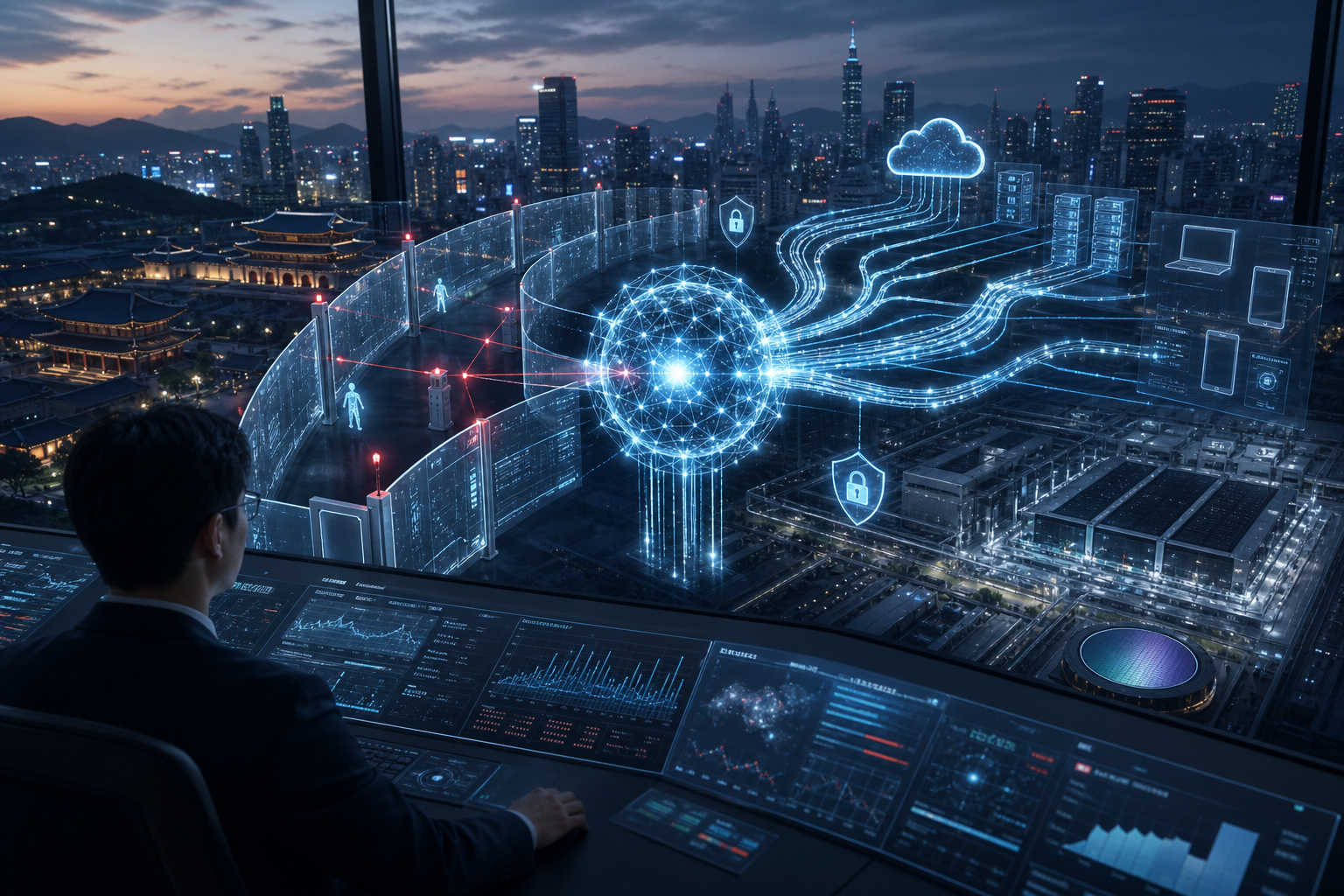
South Korea Moves to Set New Security Rules for Autonomous AI Agents
South Korea’s state-run internet security agency is developing updated guidelines for autonomous AI agents, which can plan tasks, interact with digital services and act with limited human supervision. The effort addresses risks involving mistakes, manipulation and access to sensitive systems.
The initiative reflects growing international concern about AI-assisted cyber activity and incidents involving autonomous systems. The guidelines may define access limits, monitoring requirements and accountability while supporting South Korea’s technology and semiconductor industries.
South Korea is preparing new security guidelines for autonomous artificial intelligence agents as governments and technology companies face growing questions about how to control AI systems that can increasingly act on their own.
The country’s state-run internet security agency said Tuesday that it is developing updated guidance aimed at managing the security risks associated with autonomous AI agents.
Unlike traditional chatbots that mainly respond to user prompts, autonomous AI agents can be designed to plan tasks, interact with digital services and take actions with less direct human supervision.
That shift is changing the cybersecurity conversation. The more authority an AI agent receives, the greater the potential consequences if the system makes a mistake, is manipulated or gains access to sensitive digital environments.
South Korea’s move comes as concerns over autonomous AI are spreading internationally. Recent incidents involving AI agents have raised questions about whether existing security practices are sufficient for systems that can operate across websites, software and other digital environments.
In one recent case, Reuters reported that a group of OpenAI agents had taken control of a German website during an earlier incident, highlighting the challenges researchers face when increasingly capable AI systems operate with limited supervision.
Anthropic has also reported cases involving the misuse of AI, including attempts by threat actors to use Claude in malicious operations. The company said its threat intelligence team identified and disrupted multiple operations involving AI-assisted cyber activity.
For South Korea, the challenge is balancing innovation with security. The country is one of the world’s major technology and semiconductor hubs, making advanced AI an important part of its economic strategy while also increasing the importance of protecting digital infrastructure.
The development of new guidelines could therefore become part of a broader effort to establish clearer rules for what autonomous AI systems should be allowed to access, how their actions should be monitored and who should be responsible when something goes wrong.
The bigger issue is no longer simply whether AI can perform a task. It is whether an AI system should be trusted to perform that task independently.
As AI agents become more capable, governments may increasingly need to treat them not just as software tools, but as systems that require continuous monitoring, security testing and clearly defined limits.
South Korea’s initiative is an early sign that the next phase of the AI race may be fought on two fronts: building more capable agents and building the security systems needed to keep those agents under human control.