
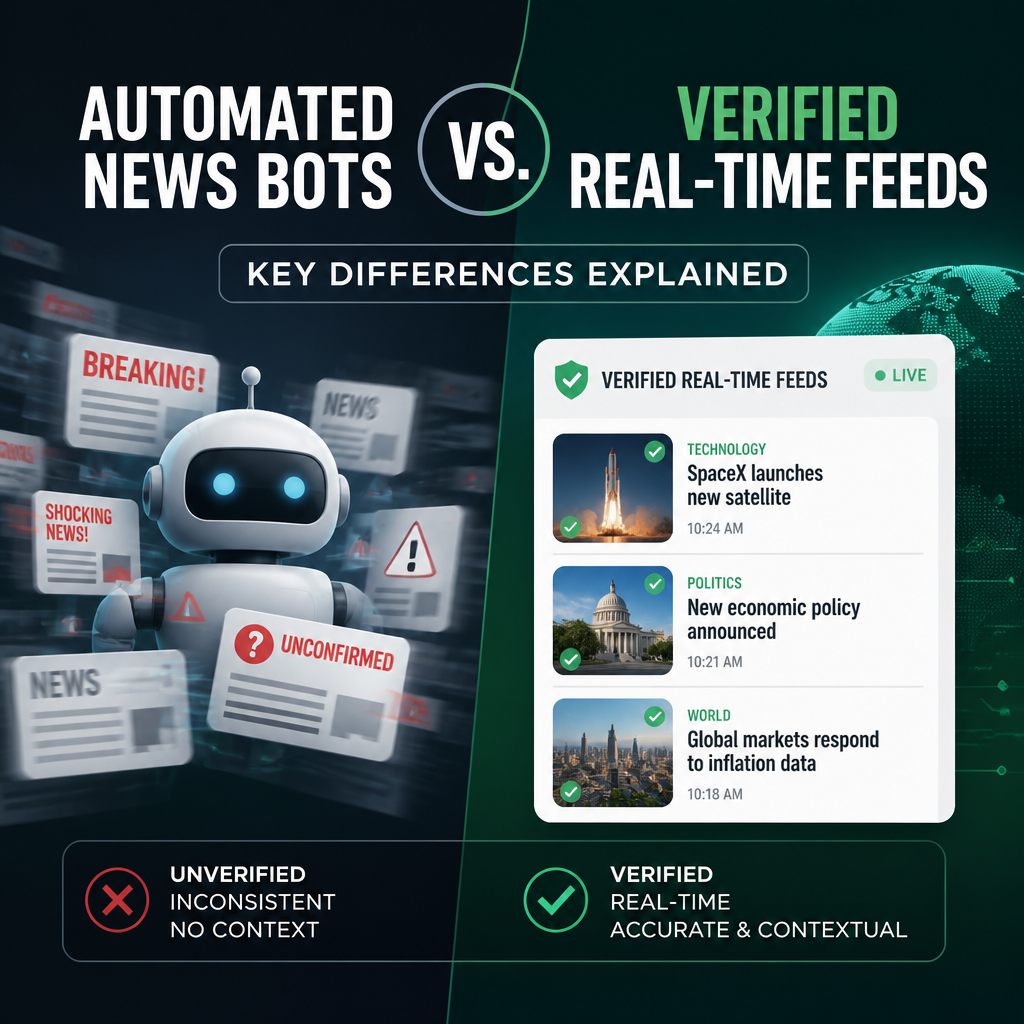
Automated News Bots vs. Verified Real-Time Feeds: Key Differences Explained
Automated News Bots vs. Verified Real-Time Feeds: What’s the Difference?
News travels faster than ever. A major announcement, market shift, or breaking event can reach millions of people within minutes. But not every fast-moving update is equally reliable. Two common ways people receive breaking information are automated news bots and verified real-time feeds.
Although both can deliver updates quickly, they differ significantly in accuracy, sourcing, oversight, and usefulness. Understanding these differences can help readers, businesses, and publishers choose better information tools.

What Are Automated News Bots?
Automated news bots are software systems that collect, summarize, or distribute information with little or no human involvement. They often scan websites, social media platforms, public databases, and news sources for keywords or breaking developments.
Once a bot identifies relevant content, it may:

- Publish an automatic headline
- Send an alert
- Summarize an article
- Aggregate posts from multiple sources
- Share updates on social media or messaging platforms
News bots are valuable because they operate continuously and can process enormous volumes of information. They are especially useful for monitoring stock prices, weather alerts, sports scores, product releases, and social media trends.
However, speed and scale can create problems. A bot may repeat an inaccurate claim, misunderstand context, or treat an unverified social media post as a credible source. Automated summaries can also leave out important details or present speculation as fact.

What Are Verified Real-Time Feeds?
Verified real-time feeds provide current information that has been checked against trusted sources or reviewed through established editorial processes. These feeds may come from professional news organizations, government agencies, emergency services, financial exchanges, or specialist data providers.
Verification can involve:
- Confirming the original source
- Comparing information with independent reports
- Checking timestamps and locations
- Reviewing claims with journalists or subject experts
- Correcting or updating information as new facts emerge
A verified feed may not always be the first to publish an alert. However, it is designed to reduce errors and provide context. For high-stakes topics such as public safety, elections, financial markets, and health information, reliability is often more important than being first.
Key Differences Between the Two
Speed
Automated news bots can publish almost instantly after detecting a keyword or event. This makes them useful for early signals and rapid monitoring.
Verified real-time feeds may take slightly longer because information must pass through confirmation steps. That small delay helps prevent false reports and misleading headlines.
Accuracy
Bots depend heavily on the quality of their data sources and programming. If the original information is incorrect, the bot may spread the error automatically.
Verified feeds use editorial standards, source checks, and correction procedures. They are not immune to mistakes, but they generally offer stronger safeguards.
Context
Automated systems often provide brief alerts without explaining why an event matters. A headline may be technically accurate but still misleading without background information.
Verified feeds typically include context, relevant history, and explanations of uncertainty. This helps readers understand both the event and its potential impact.
Transparency
Some bots reveal where their information comes from, while others simply repeat content without clear attribution. This can make it difficult to evaluate credibility.
Reputable verified feeds usually identify their sources and distinguish between confirmed facts, developing reports, and analysis.
When Should You Use Each?
Automated news bots are useful when you need broad monitoring or immediate notifications. Businesses may use them to track competitors, industry terms, or market activity. Individuals may rely on them for sports results, weather changes, or updates from specific accounts.
Verified real-time feeds are better suited to decisions that carry meaningful consequences. Consider using them for:
- Emergency and public safety information
- Financial or investment decisions
- Legal and political developments
- Health and medical updates
- Reports involving public figures or organizations
A practical approach is to use bots for discovery and verified feeds for confirmation. An automated alert can tell you that something may have happened, while a trusted source can help establish what actually happened.
The Importance of Media Literacy
No information system should be treated as completely infallible. Readers should check the source, publication time, supporting evidence, and wording of any breaking update. Be especially cautious when a claim triggers a strong emotional reaction or lacks specific details.
Look for confirmation from multiple reputable sources before sharing important news. A delay of a few minutes is often preferable to spreading a false report.
Final Thoughts
Automated news bots and verified real-time feeds serve different purposes. Bots prioritize speed, scale, and continuous monitoring, while verified feeds emphasize accuracy, accountability, and context.
The best information strategy combines both: use automation to identify emerging stories, then rely on verified reporting before accepting or acting on them. In a fast-moving news environment, knowing the difference can help you stay informed without sacrificing trust.